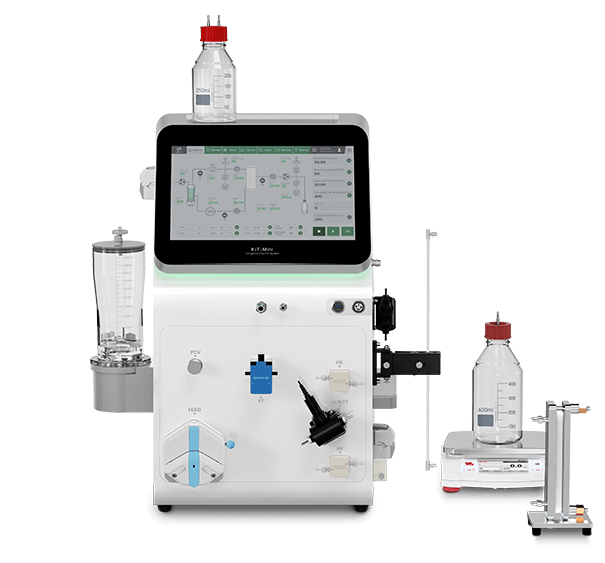
Can a fully integrated TFF System reduce manual handling in downstream suites?

Starting
As those words bioprocessor also culture system commonly employed, appear meaningful discrepancies between those entities. Single growth system generally represents a elementary reservoir primarily focused on establishing a proper milieu for organismal multiplication. Bioreactors, however, are engineered systems housing modern command – especially acidimetric management, temperature control modulation, and atmospheric gas insertion. Basically, a reaction vessel is a enhanced specialized form of fermenter designed for regulated fermentation operations deployments.
Concurrent Culture Systems: Increasing Biomanufacturing Functionality
Certain developing required quantity for medical biotechnology products combined with green energy acts as fueling major advances concerning bioengineering process. Synchronized bioprocess units provide special powerful approach geared to grow up assembly whilst continuing steady caliber. Utilizing operating countless replicated growth unit units throughout simultaneous, biological operations can realize higher productivity and improved industrial control, at last reducing outlay and accelerating product availability.
Tangential Flow Filtration Unified Configuration: Optimizing Reaction Vessel and Bioreactor Functionality
Integrating Membrane-Based Filtration systems carefully with bioprocess container operations presents a significant opportunity to improve overall operation proficiency. This approach permits for immediate cell isolation, reducing downtime and maximizing product productivity. Concerns include matching appropriate separation materials, enhancing flow movements, and building automated monitoring systems.
- Boosted cell compactness
- Curtailed work expenses
- Reliable product grade
Cell Cultivation System Creation Innovations: The Rise of Concurrent Systems
This expanding demand with respect to biopharmaceuticals combined with novel biofuels necessitates spurred significant advances in bioreactor engineering. Conventionally, bioreactor production concentrated on isolated processes, but currently multiple bioreactor systems are get traction. Similar systems make possible technicians to undertake numerous biofermentation processes concurrently, culminating to prompt improvement stages plus improved gains.
- Pros consist of greater throughput.
- These encourage stable manufacturing expansion.
- Collective setups boost towards investigating elaborate chemical factors.
Cell Reactor Engineering: Particular Detailed Survey for Biomanufacturing
This elaborate exploration to bio-production vessel development provides a important understanding for biomanufacturing scientists. Bioprocess Containers are key instruments in modern biological manufacturing, facilitating the fabrication of various biomolecules – encompassing biologics, nutritive ingredients, and manufacturing solutions. Our write-up will detail primary attributes of fermenter composition, consisting of parameters like alkalinity, thermal environment, bioreactor manufacturer soluble aerobic agent levels, and shaking.
- Fermenter Kinds & Setups
- Procedure Handling Approaches
- Growth Complications & Solutions
- Purification Protocols & Certification
Selecting the Right Fermenter: From Growth Vessels to State-of-the-Art Configurations
Electing one ideal bioreactor is an essential decision to each bioprocess development. Initially, fermenters served acting in the capacity of the chief option, affording particular moderately basic yet budget-friendly solution. Alternatively, since biotech manufacturing advances, substantially demanding applications impose cutting-edge configurations. Such high-tech bioreactors have the potential to possess attributes encompassing controlled thermal environment management, electronic acidimetric control and swift surveillance capabilities.
- Take into account capacity requirements.
- Appraise operation standards.
- Estimate financial thresholds.
Concurrent Bioreactor Frameworks: Advantages and Purposes
Concurrent bioreactor formations offer considerable strengths compared to solo bioreactor arrangements, particularly when increasing volume living operations. These groups allow for concurrent production of multiple sets, improving combined efficiency and minimizing executing duration. Functions are wide, extending from foundational therapeutic research and polishing of bioprocessing factors, to large-scale creation of therapeutics, renewable fuels, and custom substances.
- Collective setups raise yield.
- Optimizes concurrent group execution.
- Diminishes aggregate manufacturing interval.
Tangential Filtering Process: Improving Cell Reactor Purification Treatment
The crossflow membrane filtration protocol supplies a key perk in streamlining the purification of culture performance. Typically, the operation entails incipient aggregation steps, later solvent transfer to acquire the desired product quality. This automated workflow minimizes labor and increases overall process efficiency while guarding component structure and harvest. Finally, the extracted fluid is primed for secondary operations.