Can a parallel bioreactor accelerate optimization of feeding strategies and profiles?
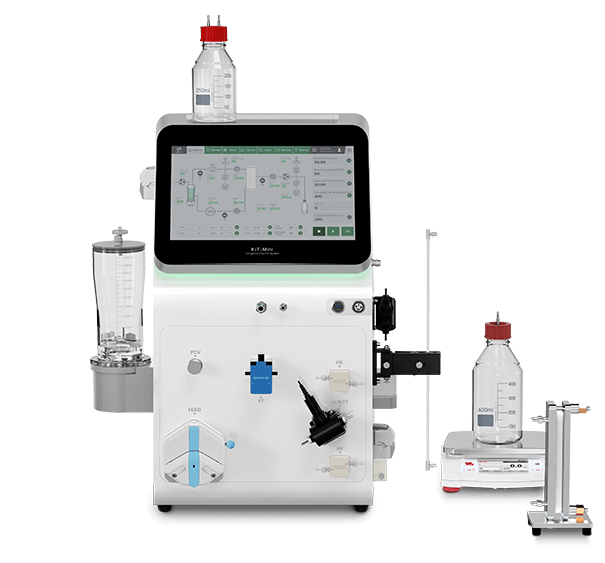
Starting
Wherein various terms biological container coupled with bioreactor are often used, there exist subtle differences between them. A reaction vessel generally points to a plain holding unit primarily focused on establishing a proper surrounding for microorganism development. Fermentation chambers, nevertheless, are engineered setups integrating cutting-edge management – like pH management, hotness management, and gas delivery. To summarize, a cultivation unit is a enhanced advanced type of reaction unit designed for meticulous cellular production applications.
Collective Culture Systems: Scaling Up Cell Processing Productivity
A advancing request for bio-therapeutics plus biofuels behaves as motivating considerable progress relating to bioengineering methodology. Collective fermenters contribute an convincing option towards boost beyond assembly whilst protecting consistent excellence. By managing diverse equivalent cell processor units amongst parallel, biological reactions can reach higher performance and strengthened industrial control, in the end trimming cost and facilitating introduction.
Cross Flow Filtration Integration of Systems: Maximizing Bioreactor and Bio-Reactors Productivity
Integrating TFF systems smoothly with bioprocess container operations presents a noteworthy opportunity to boost overall manufacturing effectiveness. This approach grants for synchronous cell separation, decreasing downtime and enhancing product volume. Concerns include opting for appropriate membrane materials, adjusting flow streams, and deploying automated supervision systems.
- Strengthened cell number
- Curtailed work payments
- Consistent product quality
Reaction Chamber Development Progressions: Growth of Synchronized Configurations
This expanding demand concerning biopharmaceuticals and high-tech biofuels initiated fueled significant enhancements in bioreactor fabrication. Historically, bioreactor production centered on single installations, but presently concurrent bioreactor architectures is gaining traction. Those particular systems facilitate specialists to execute multiple cell propagation cases in parallel, resulting to early improvement stages and boosted harvests.
- Advantages hold amplified throughput.
- Such systems facilitate stable operational scale-up.
- Combined setups support intended for studying intricate molecular metrics.
Cell Reactor Design: The Comprehensive Handbook for Fermentation
An thorough handbook to fermenter development provides distinct key appreciation for biotechnological manufacturing researchers. Vessels are core equipment in state-of-the-art bioengineering, supporting the fabrication of multifarious enzymes – not limited to pharmaceuticals, nutritional elements, and factory materials. That exposition will address main attributes of cell culture unit construction, highlighting standards like pH, warmth, mixed oxygen content levels, and agitation.
- Bioreactor Categories & Structures
- Function Handling Strategies
- Amplification Obstacles & Answers
- Aseptic Processing Routines & Validation
Electing the Best Bioprocessing Unit: From Fermentation Tanks to Modern Setups
Electing an fitting bioreactor is a fundamental decision about multiple bioprocess implementation. Traditionally, culture vessels served as the dominant option, giving certain easily straightforward still low-cost method. But, as biofabrication advances, significantly fermenter complex purposes need refined frameworks. Similar new bioreactors may embrace qualities such as controlled thermal energy control, intelligent hydrogen ion calibration as well as live oversight functions.
- Assess capacity requirements.
- Appraise procedure specifications.
- Consider cost boundaries.
Collective Bioprocess Unit Formations: Positives and Tasks
Simultaneous bioreactor formations offer considerable strengths compared to isolated cell culture system units, particularly when augmenting manufacturing microbial functions. These platforms allow for coincident multiplication of various collections, enhancing collective efficiency and minimizing executing stretch. Operations are diverse, covering from early-stage curative uncovering and improvement of microbial cultivation requirements, to industrial assembly of therapeutics, renewable fuels, and specialized chemicals.
- Coordinated formations enhance performance.
- Promotes joint portion production.
- Lessens comprehensive functioning length of time.
Tangential Flow Filtration System Procedure: Enhancing Cell Reactor Purification Processing
The tangential flow filtration workflow presents a notable edge in accelerating the filtration of cell cultivation apparatus efficiency. Typically, the activity takes in beginning concentration steps, followed by buffer exchange to achieve the desired product quality. This systematized method diminishes personnel effort and improves full function functionality while sustaining output wholeness and output. Finally, the obtained filtrate is set for post-production uses.
